Finding a high‑end graphics card that fits your budget in 2026 can feel like chasing ghosts. Nvidia’s GeForce RTX 3080 debuted in September 2020 at $699 and quickly became the go‑to GPU for enthusiast gaming. Four years later, memory shortages, AI demand and a new generation of RTX 50‑series cards have reshaped the market. This guide explores how much a used RTX 3080 should cost in Europe in 2026, compares prices across regions and alternatives, and shows you how to avoid buying a lemon.
Why the RTX 3080 still matters in 2026
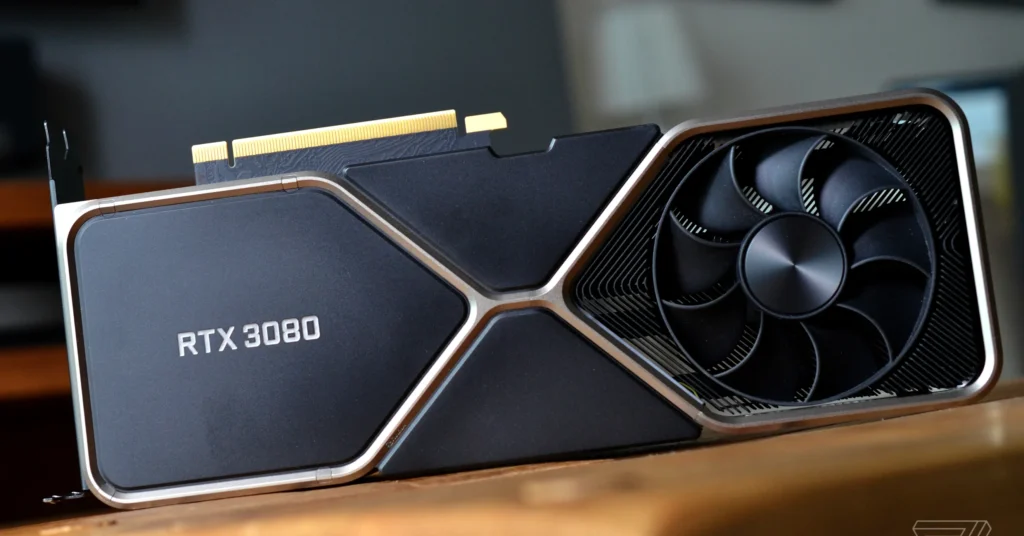
espite being a 2020 release, the RTX 3080 remains relevant because of its powerful architecture. Nvidia’s Ampere design uses second-generation ray-tracing and third-generation tensor cores, giving it 8,704 CUDA cores, 10 GB of GDDR6X memory, and a 320 W power draw. At launch, it targeted enthusiast gamers at $699 / €755, and early reviews praised its ability to nearly double frame rates compared to previous generations. For 1440p gaming and many creative workloads, this card still delivers smooth performance.
The card’s longevity also owes much to its position relative to the RTX 3090. Nvidia’s flagship RTX 3090 has 24 GB of VRAM and 350 W draw, making it roughly 12.7% faster in synthetic benchmarks yet 65.5% more expensive at retail. The RTX 3080 therefore offers 53.8% better value per euro/dollar than its bigger sibling, and it remains a sensible choice for gamers who don’t need 24 GB of memory or extreme overkill for 4K at 120 fps.
Used price landscape: Europe, US and Canada
A fair used price for the RTX 3080 in Europe in early 2026 is around €379. BestValueGPU’s EU price tracker lists approximately €378–€380 for February 2026, while a new card sells for about €1,201, compared to its original launch price of roughly €755. The tracker cautions that buying new at full retail offers poor value and notes that AMD’s Radeon RX 6900 XT often delivers better price-to-performance. Across Europe, GPU prices have drifted upward due to memory constraints and AI-driven demand, with refurbished PC sales doubling year-over-year in the UK and second-hand sales rising about 7% across Germany, Italy, and Spain.
Europe’s AI infrastructure push is accelerating fast. NVIDIA recently highlighted Stargate Norway a massive sovereign AI facility powered by 100,000 GPUs and renewable energy underscoring how critical high-performance graphics hardware has become beyond gaming. As AI data centers expand across Europe, demand for powerful GPUs continues to influence pricing and availability in the secondary market including cards like the RTX 3080.
The US market shows similar depreciation. By February 2026, an RTX 3080 sells used for about $325 while new units cost around $899, versus a $699 launch MSRP. In Canada the pattern holds: the card launched at roughly CAD\u00a0954 and sells new for about CAD\u00a01135, but used units average CAD\u00a0410.43. An analysis of 12‑month sales on Jawa, a peer‑to‑peer marketplace, shows a price range of $293–$580 with an average sale price around $415 and price volatility of 16%. These differences reflect currency fluctuations, shipping costs and regional supply.
Market forces and trends
Memory shortages and AI demand have tightened global GPU supply. A DropReference analysis notes that global memory supply crises since late 2024 have led manufacturers to pass costs onto consumers, and TechSpot’s Q1 2026 pricing update reports price increases of 3-36% across multiple regions.
Meanwhile, refurbished PC sales surged because buyers seek affordable hardware: UK sales of second‑hand PCs doubled in Q4 2025 and second‑hand devices priced €200–€300 made up 40% of sales. These trends drive more buyers to the used GPU market but also support higher prices.
Another factor is the legacy of cryptocurrency mining. Tom’s Hardware warns that many RTX 30‑series GPUs may have been used for mining during the 2021 crypto boom, which could reduce lifespan. Buyers should thus focus on cards from trusted sellers and newer series; the article recommends running stress tests like FurMark to check for hidden defects.
As new RTX 50‑series cards roll out, some gamers are selling off their 30‑series cards, but supply remains limited by high demand for AI workloads.
How the RTX 3080 compares to alternatives
Nvidia’s RTX 3090 is the obvious sibling to compare. The 3090 boasts 10,496 CUDA cores and 24 GB of memory, drawing 350 W. Benchmarks show it about 12.7% faster than the 3080 yet 65.5% more expensive at retail. It is overkill for most gamers but appeals to 3D artists and AI developers who need large VRAM buffers. AMD’s Radeon RX 6900 XT challenges the 3080 with a similar or slightly higher performance yet lower price; BestValueGPU notes that the 6900 XT delivers better value and 8.7% higher performance per euro than the 3080.
Within Nvidia’s lineup, the RTX 3070 and 3070 Ti are cheaper alternatives but deliver noticeably lower performance. Sportskeeda explains that for modern 1440p gaming you should aim for at least RTX 3080‑level power; 4K gaming with high settings is better served by the 3080 Ti, 3090 or 3090 Ti with >12 GB of VRAM. Puget Systems’ review of Ampere cards found the 3080 nearly twice as fast as the RTX 2080 Super and around 15‑20% slower than the 3090. Thus the 3080 remains a strong middle ground between cost and performance.
| GPU | VRAM | Power draw | Launch MSRP | Typical used price | Relative performance | Notes |
|---|---|---|---|---|---|---|
| RTX 3080 NVIDIA | 10 GB GDDR6X | 320 W | $699 / €755 | €378 (Feb 2026) |
Baseline100
Reference point
|
Good value; strong 1440p performer |
| RTX 3090 NVIDIA | 24 GB GDDR6X | 350 W | $1,499 | ~$900 used (US) |
+12.7%113
More VRAM headroom
|
Very expensive; ideal for 4K and AI |
| Radeon 6900 XT AMD | 16 GB GDDR6 | 300 W (approx.) | $999 | — |
+8.7%109
Strong raster value
|
Better value per euro; limited ray-tracing |
Frequently asked questions
What’s a fair used price for the RTX 3080 in Europe in 2026?
A fair range is €378–€400, with BestValueGPU reporting a February 2026 average of €378.77. Actual listings vary based on condition, cooling design, and manufacturer.
How does the RTX 3080’s VRAM affect performance? The card has 10 GB of GDDR6X memory. This is adequate for 1440p gaming but can limit very high‑resolution or complex workloads; cards with 16–24 GB perform better at 4K.
Is the 3080 still good for 4K gaming? It can handle 4K at medium settings, but for high settings and ray‑tracing the 3080 Ti or 3090/3090 Ti with larger VRAM are better choices.
How does the 3080 compare to the 3090? The 3090 is about 12.7% faster but costs 65.5% more at retail and consumes more power. Unless you need 24 GB of VRAM, the 3080 offers better value.
People also liked
What about AMD alternatives?
The Radeon 6900 XT offers slightly better performance than the 3080 and often sells for less. It lacks mature ray‑tracing but is worth considering for raster performance.
Are used 3080s risky because of crypto mining?
Yes. Many 30‑series cards were used to mine cryptocurrency during the 2021 boom. Tom’s Hardware advises sticking to sellers with return policies and testing the card thoroughly.
Do European consumers have protection when buying second‑hand?
Yes. EU law guarantees at least a one‑year legal warranty and a 14‑day return period. Over half of online second‑hand traders inspected in 2025 were found to breach these rules, so buyers should remain vigilant.
What power supply should I pair with an RTX 3080?
Nvidia recommends a 750 W PSU. Undersized or low‑quality units can cause crashes or limit performance.
How does the used price differ between the US and Canada?
In the US, used RTX 3080 cards sell for about $325, compared with roughly $899 for a new unit. In Canada, used prices average around CAD 410.
Who this is for – and who should skip
The RTX 3080 is ideal for gamers who want high‑end performance without paying flagship prices. If you play at 1440p or 4K with moderate settings, run creative workloads like video editing or 3D rendering, or need a strong GPU for machine learning experimentation, a well‑maintained used 3080 offers tremendous value. Its ray‑tracing and DLSS support keep it relevant, and the European second‑hand market offers substantial savings over new units.
On the other hand, shoppers targeting ultra‑smooth 4K gaming with max settings or professional workloads requiring >12 GB of VRAM should look at the 3080 Ti, 3090 or the newer RTX 50‑series. Those worried about the card’s mining history may prefer a brand‑new GPU despite the premium. Budget‑conscious buyers with 1080p monitors might instead choose the cheaper RTX 3070 or AMD 6700 XT; they offer excellent value for lighter workloads.
Conclusion: what’s next?
In Europe in 2026, a used RTX 3080 should cost around \u20ac380 and remains an excellent option for high‑performance gaming and productivity. Prices differ across regions but largely reflect supply constraints and demand in the AI era. By understanding how the 3080 compares to the 3090 and the RX 6900 XT, checking seller credibility and exercising your EU consumer rights, you can confidently navigate the used GPU market. The next generation of RTX 50‑series cards will eventually push prices down, but for now the RTX 3080 offers a sweet spot between cost and capability.